
Bacterial Endotoxin Reduction System/Cold WFI generation

Bacterial Endotoxin Reduction System/Cold WFI generation

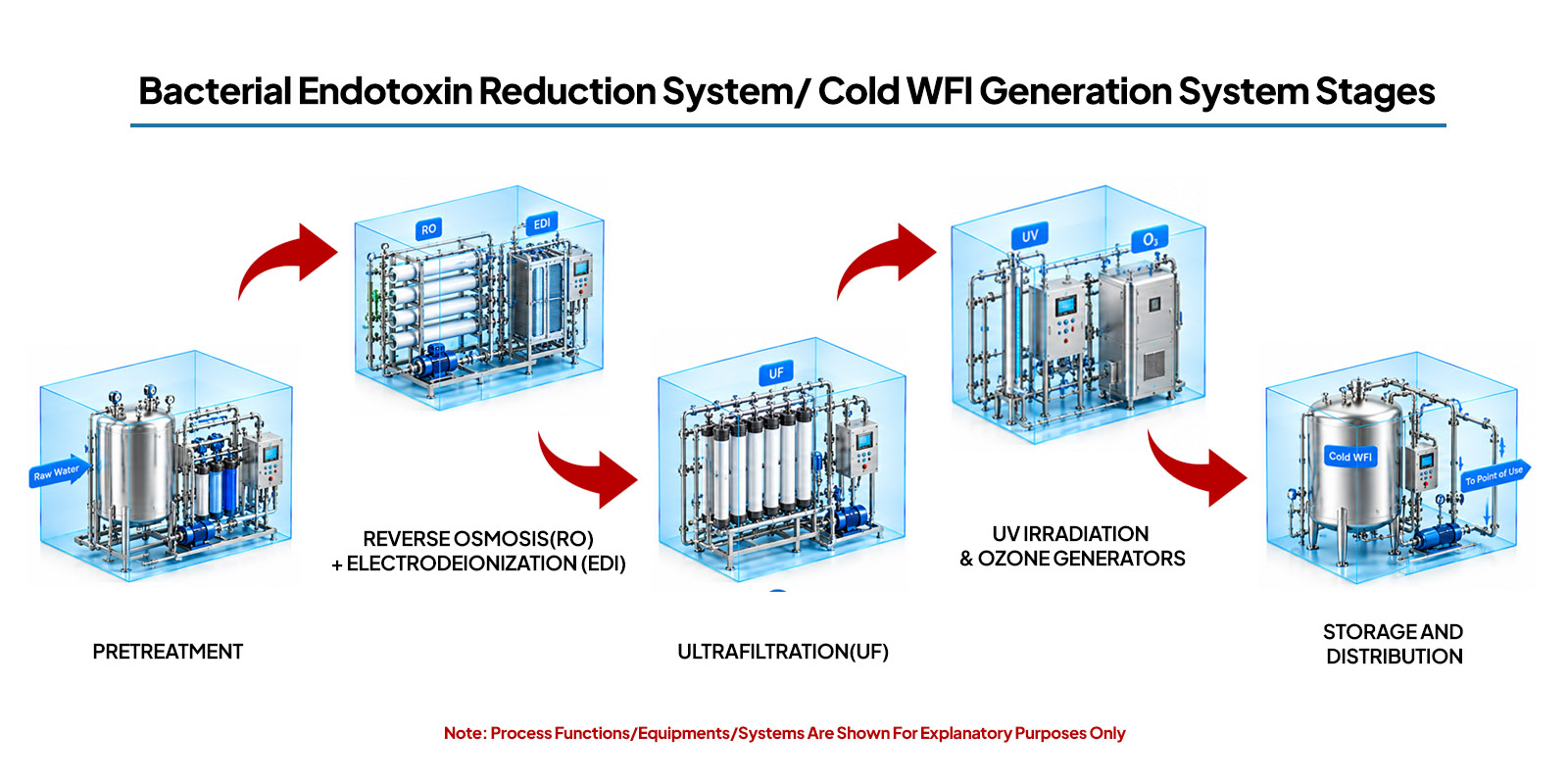
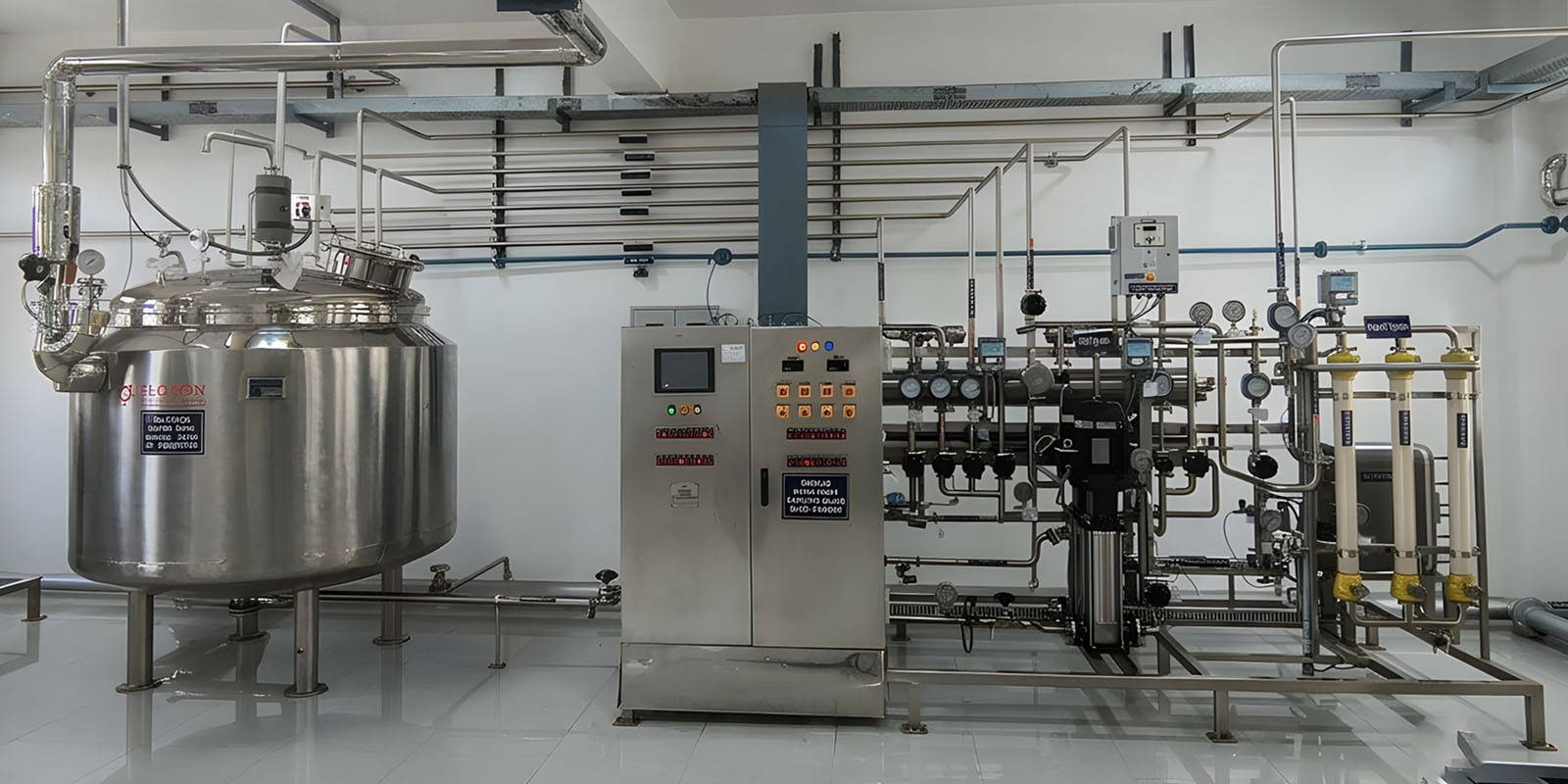
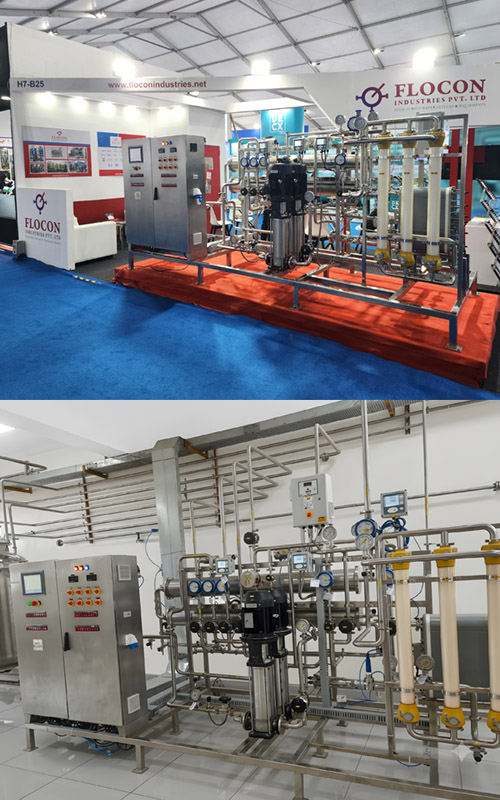
Flocon’s Bacterial Endotoxin Reduction System/Cold WFI Generation System is a compact customisable system engineered to produce Cold WFI efficiently through validated microbial-control measures while complying with regulatory accepted standards. Our systems are designed with sanitary SS316L construction using hygienic piping, sanitary valves and a membrane assembly suitable for pharmaceutical applications. Additionally, our systems are engineered to accommodate features such as automation with PLC control and data logging to comply with 21 CFR Part 11 if required. The core stages of our system consist of a Reverse Osmosis (RO) system/Electrodeionization (EDI), Ultrafiltration (UF), UV irradiation, and WFI storage and distribution. The RO/EDI and the ultrafiltration (UF) membrane separation with a cut-off of ≤ 6,000–10,000 Da work in tandem with continuous monitoring and automated sanitisation to primarily reduce bacterial endotoxins present in the incoming feed water and protect the downstream WFI generation system. The UV irradiation destroys residual bioburden and prevents ozone residuals at the process point-of-use. Our systems account for continuous control of membrane integrity, differential pressure, microbial load and sanitisation to maintain WFI quality. Flocon’s BERS/ColdWFI systems are process validated with validation data and continuous monitoring to produce WFI output that meets current USP, EP, BP/IP Pharmacopoeia requirements and cGMP guidelines, making it suitable for pharmaceutical applications. 

Standard Features

Designed to comply with current USP, EP, BP/IP Pharmacopoeia requirements and cGMP guidelines.

PLC-based controls with HMI/IPC operation.

Product contact parts in SS316L stainless steel with electropolished internal surfaces (Ra ≤ 0.4 µm typical).

Premium valves and instruments.
Efficient separation of endotoxins.

All required safety interlocks.

21 CFR Part 11 optional.
Factory assembled, piped, wired and skid-mounted for easy installation on site.

304 Stainless steel skid.
System Parameters

Bacterial Endotoxin Reduction System / Cold WFI Generation
Parameters Range / Requirements
Capacities 50 to 6,000 LPH
Feed Water Source RO / RO-EDI permeate
Conductivity < 1.3 µS/cm @ 25°C
Total Organic Carbon < 500 ppb
Total Microbial Count < 10 cfu/100ml
Endotoxin < 0.25 EU/ml
Op Temp 135 to 90°C
  1. 1

    Pretreatment

    The feed water is pretreated to condition the water, remove heavy impurities (salts, organics and harmful bacteria) and prevent fouling of further critical purification stages.

  2. 2

    Reverse Osmosis (RO) + Electrodeionization (EDI)

    The pretreated water is fed to the RO, which removes dissolved salts, organic contaminants, particulate matter, and endotoxins. The RO permeate is then polished with EDI to remove ions and impurities.

  3. 3

    Ultrafiltration

    The Ultrafiltration (UF) validated membrane with a defined molecular weight cut-off (typically ≤ 10,000 Da or ≤ 6,000 Da) blocks endotoxins, colloidal contaminants and bacterial fragments.

  4. 4

    UV Irradiation & Ozone Generators

    UV irradiation (254 nm) and ozone generators act as the primary active bioburden control measures for cold-loop sanitisation of storage and distribution to prevent residual bioburden and ozone residuals.

  5. 5

    Storage and Distribution

    The system is kept under a continuous loop flow of velocity (≥ 1 m/s), UV, and ozone management to prevent microbial growth and deliver water at ambient temperature directly at the point of use.

Certifications & Compliance

Validation documentation

Complete DQ/IQ/OQ validation package along with supporting documentation followed by protocol execution support.
Pharmacopoeia standards

Designed to meet current USP/BP/EU pharmacopoeia standards and WHO / cGMP requirements.
Made To Serve

Pharmaceutical

Biotechnology

Food & Beverage

Diagnostics

Healthcard / Hospitals

Chemical Processing

Semiconductor Manufacturing

Power Generation

Frequently Asked Questions

Find answers to common questions about our industrial and manufacturing services, processes, and support. If you need more details, our team is always ready to help.

Still Have Questions?

Our experts are here to guide you through every step of your industrial transformation journey.

  • Distillation: Highly effective; endotoxins are retained because they are non-volatile. Commonly used for WFI generation.
  • Ultrafiltration (UF): Very effective when properly selected and operated; membranes physically retain endotoxins and are often used as a polishing step.
  • Reverse Osmosis (RO): Provides significant endotoxin reduction, but is generally considered a barrier rather than the sole control for WFI.

Best practice: Pharmaceutical systems typically combine multiple barriers with hygienic design, validated sanitization, and routine endotoxin monitoring.

Depyrogenation Removes or destroys pyrogens, mainly bacterial endotoxins. In water systems, distillation is a key method because endotoxins are non-volatile and are separated from the water vapor or filtration based on molecular weight cut off.  Sterilization Eliminates or inactivates viable microorganisms such as bacteria, fungi, and spores, commonly using heat, steam, or chemical sanitization. The Key difference is that Sterilization targets living microorganisms; depyrogenation targets endotoxins. Sterilization does not necessarily remove endotoxins. Therefore, a pharmaceutical water system may require both microbial control and endotoxin control, depending on the water grade and intended use. 

For WFI, the compendial endotoxin specification is typically ≤0.25 EU/mL. However, WHO does not prescribe universal alert/action limits; they should be established from system qualification and historical trending.

A practical example is:

  • Alert: 0.20 EU/mL
  • Action: 0.22 EU/mL
  • Specification: ≤0.25 EU/mL

These limits should be justified by your facility’s validated process and historical data.

Bioburden and endotoxin are related but not interchangeable:

  • Bioburden measures the number of viable microorganisms in the water.
  • Endotoxins are components released mainly from Gram-negative bacteria, and they can remain even after bacteria are killed.
  • High or increasing bioburden can therefore increase the risk of endotoxin accumulation, especially in stagnant or poorly controlled loops.
  • Effective microbial control—sanitization, proper circulation, temperature control, and hygienic design—helps control both.
  • Endotoxin testing is still required separately, because low bioburden does not automatically guarantee low endotoxin levels.

There is no universal fixed frequency mandated by WHO/GMP; endotoxin testing should be defined by a risk-based, validated sampling plan and historical trends.During qualification frequent sampling, typically daily at Generation outlet and weekly at each representative point of use.During Routine WFI usage, commonly weekly or risk-based, with all outlets covered over a defined period. After sanitization, maintenance, or deviations: test before returning the system to normal use. Purified Water: frequency is also risk-based and may be less frequent than WFI. The key is validated frequency + trend monitoring, rather than simply testing on a fixed calendar schedule.

The LAL (Limulus Amebocyte Lysate) test detects and quantifies bacterial endotoxins in pharmaceutical water.

  • Sample: Collect water aseptically in a validated endotoxin-free container.
  • Reaction: Mix the sample with LAL reagent; endotoxin activates the lysate.
  • Detection: Measure the reaction using gel-clot, kinetic turbidimetric, or kinetic chromogenic methods.
  • Quantification: Compare the response with certified endotoxin standards and calculate EU/mL.
  • Acceptance: Results are compared with the applicable WFI/Purified Water specification and facility alert/action limits.
  • Controls: Include positive controls, negative controls, and inhibition/enhancement testing to confirm the sample does not interfere with the assay.

Clarify your queries with our High-Purity Specialist

Share your equipment queries, raw water parameters or loop requirements. Our engineering team will review your requirements and get in touch within 48 hours to clarify your queries and provide you with our best purity solutions.