
Potable Water Generation

Potable Water Generation

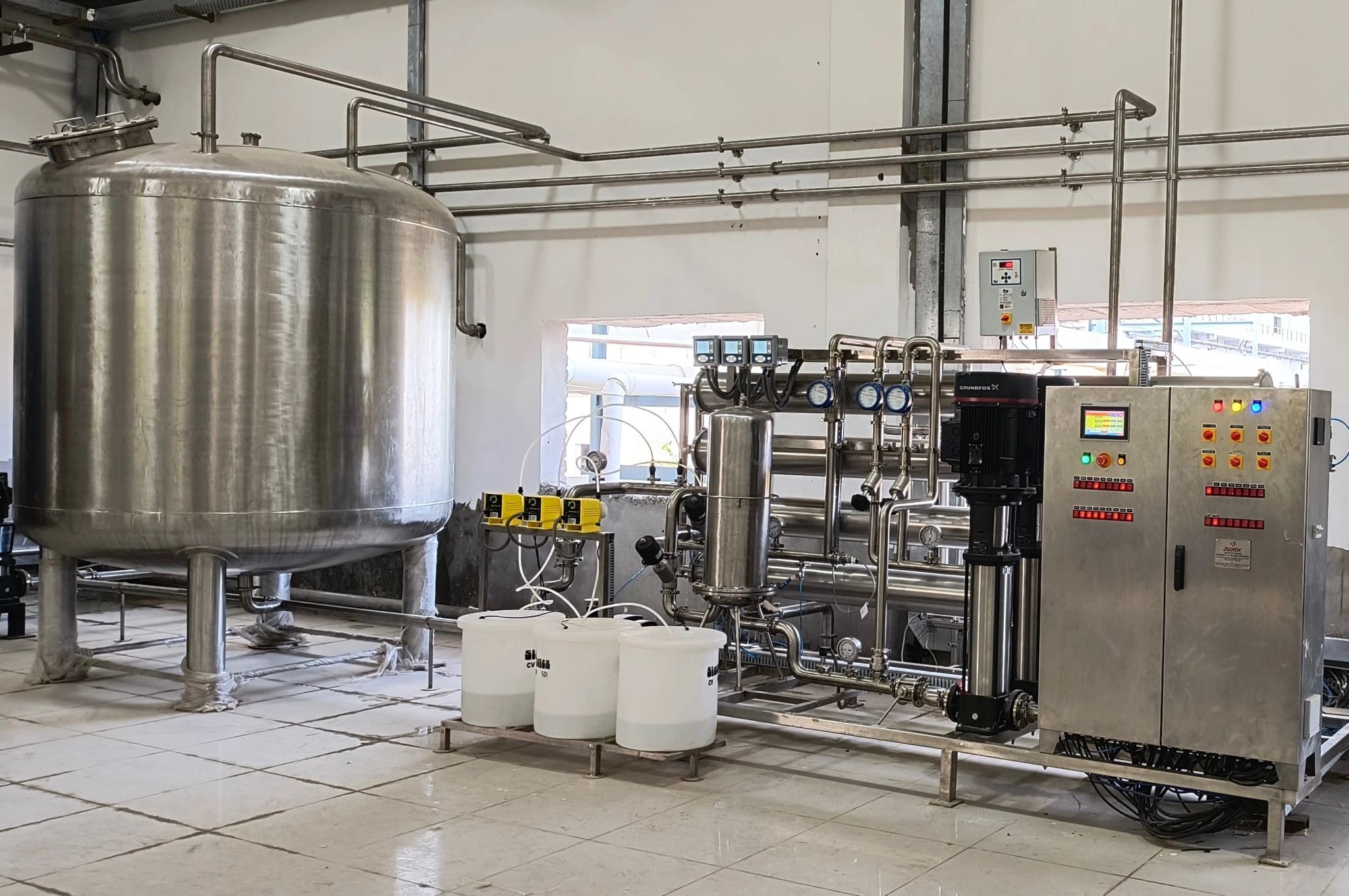
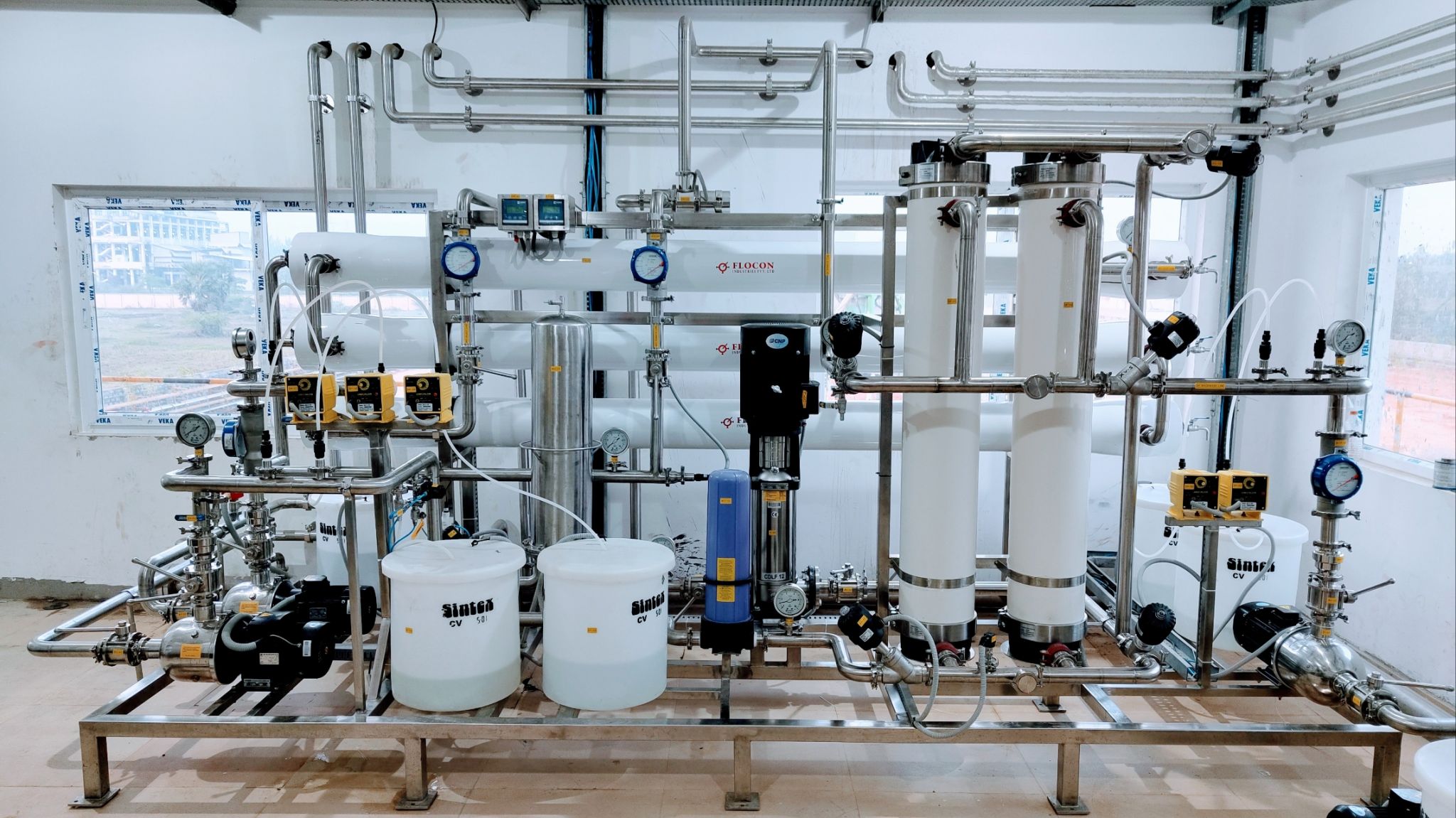
Potable Water Generation/Reverse Osmosis (RO) systems from Flocon Industries offer a cost-effective and sustainable solution for generating high-purity water. Our portfolio of Industrial Reverse Osmosis(RO systems) is engineered and optimized for large industrial manufacturing, medium-sized commercial processing applications and small laboratory applications. Having optimised our designs over the years, our Potable Water Generation/Reverse Osmosis (RO) systems can achieve TDS as low as 50 ppm for multiple applications such as drinking, Industrial washing, paint shop, boiler feed, utilities, etc. Catering to your requirement we provide bespoke solutions that are manufactured for a wide range of flow rates from 100LPH (26GPH) to 15,000LPH (3960GPH). Manufactured using hygienic design principles and standard accepted materials, RO systems ensure compliance with cGMP, US FDA, WHO, and global pharmacopoeia requirements, including USP, EP, and IP standards, to be industry-ready.

Standard Features

Complete DQ/IQ/OQ validation package with protocol execution support.

304 Stainless steel skid.

Highly effective cleaning system.

Premium valves and instruments.

Heat Sanitizable: hot water or steam arrangements available for post treatment.
High membrane cross-flow velocity, reduces fouling.

PLC based controls.

Unit is completely piped, wired and assembled on skid at the factory which reduces installation costs and start-up time.

≤0.4 Ra SS316L Electropolished permeate piping or PVC piping available.

Permeate sample ports for each Pressure Housing.
System Parameters

Parameter Potable Water (POW)
pH 5-8
Conductivity / TDS <450 µS/cm / <300 ppm
Pathogens Absent
Total microbial count <100 cfu/ml
Capacities (Customizable) As per Requirement
  1. 1

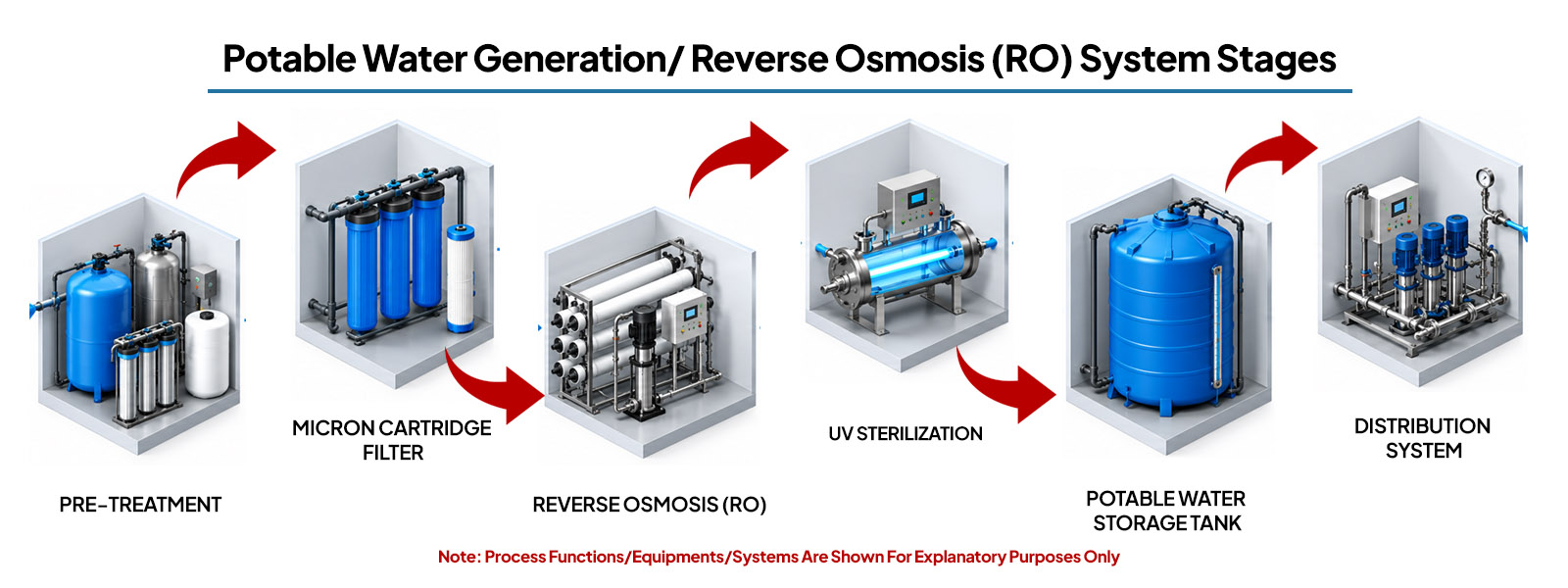
    Pretreatment

    Shields the sensitive downstream purification components from large particulates, hardness, and oxidants present in incoming raw water.

  2. 2

    Micron Cartridge Filter

    Safeguards the sensitive Reverse Osmosis (RO) membranes from physical abrasion or clogging caused by residual suspended particles.

  3. 3

    Reverse Osmosis System

    Strips out up to 99% of dissolved salts, organics, and microorganisms by pushing water to be treated through semi-permeable membranes using high pressure.

  4. 4

    UV Sterilization

    Disinfects the permeate by emitting ultraviolet light to disrupt the DNA of microorganisms and viruses without the addition of external chemicals.

  5. 5

    Potable Water Storage Tank

    Holds treated, compliant potable water in a steel tank vessel to store and supply for industrial consumption needs.

  6. 6

    Distribution System

    Supplies potable water to processing units, utility stations, or auxiliary treatment loops at regulated pressure and flow.

Certifications & Compliance

Validation documentation

Complete DQ/IQ/OQ validation package along with supporting documentation followed by protocol execution support.
Pharmacopoeia standards

Designed to meet current USP/BP/EU pharmacopoeia standards and WHO / cGMP requirements.
Made To Serve

Pharmaceutical

Biotechnology

Food & Beverage

Diagnostics

Healthcard / Hospitals

Chemical Processing

Frequently Asked Questions

Find answers to common questions about our industrial and manufacturing services, processes, and support. If you need more details, our team is always ready to help.

Still Have Questions?

Our experts are here to guide you through every step of your industrial transformation journey.

Typical water treatment technologies applied to produce potable water from raw or bore well source include microbial disinfection followed by multigrade sand filter, softener, Ultrafiltration and a Reverse osmosis (RO) System using brackish water Membranes.

Potable water is generally used in manufacturing of some API products and for pre-rinse activity after production completion and product changeover.The conductivity / TDS limits for Potable water is much higher in comparison to Purified water and Water for injection. For other pharmaceutical applications purified water is generally used for the final washing requirement. Water for injection (WFI) is used for any production of injectable related products. 

There are various disinfection options available for production for potable water systems. This include Chlorination, Ozonation, Ultra violet (UV), Chlorine dioxide, Hydrogen peroxide, etc. The method to be chosen shall depend widely on the microbial load of the feed water. Another parameter to consider if the feed water is present with pathogens like pseudomonas aeruginosa and E Coli, in such cases a stronger disinfection method like ozonation need to be selected or two disinfectant systems may need to be used in the whole system to cater to the pathogens in feed water. It should be noted that the disinfection system should be Automated so that there is sufficient dosage at all times. 

Potable water once generated can be stored in a multi layer HDPE Tank, FRP tank or Stainless steel tank and then used for distribution, Traditionally the distribution piping were installed in a Header and user drops type layout, but this type of installation layout leads to high microbial growths overtime. Hence its recommended to install the potable water distribution system in a loop system layout to maintain continuous circulation within the piping and also have the means to perform heat sanitization / Chemical sanitization at regular timelines.  

For a potable-water system used in a GMP facility, qualification typically follows a documented, risk-based approach:

  • DQ: Confirm design meets drinking-water and GMP requirements.
  • IQ: Verify installation, materials, piping, instruments, calibration, and documentation.
  • OQ: Challenge operating controls, alarms, disinfection, and system performance.
  • PQ: Demonstrate consistent water quality through chemical and microbiological testing at representative points of use.
  • Routine monitoring: Trend key parameters, verify disinfection, sampling, and microbiological control.
  • Requalification: Perform after significant changes and periodically according to the risk-based validation plan.

WHO specifically recommends DQ/IQ/OQ/PQ and documented commissioning/qualification for pharmaceutical water systems. 

Yes, most pharmaceutical companies install and qualify a Potable water system which is then also used as feed to a Purified (RO-EDI) plant to produce purified water. This concept reduces capex and opex costs, lower energy utilization, manpower optimization and smaller equipment footprint.

Clarify your queries with our High-Purity Specialist

Share your equipment queries, raw water parameters or loop requirements. Our engineering team will review your requirements and get in touch within 48 hours to clarify your queries and provide you with our best purity solutions.