
Pure Steam(PS) Generation Systems

Pure Steam(PS) Generation Systems​

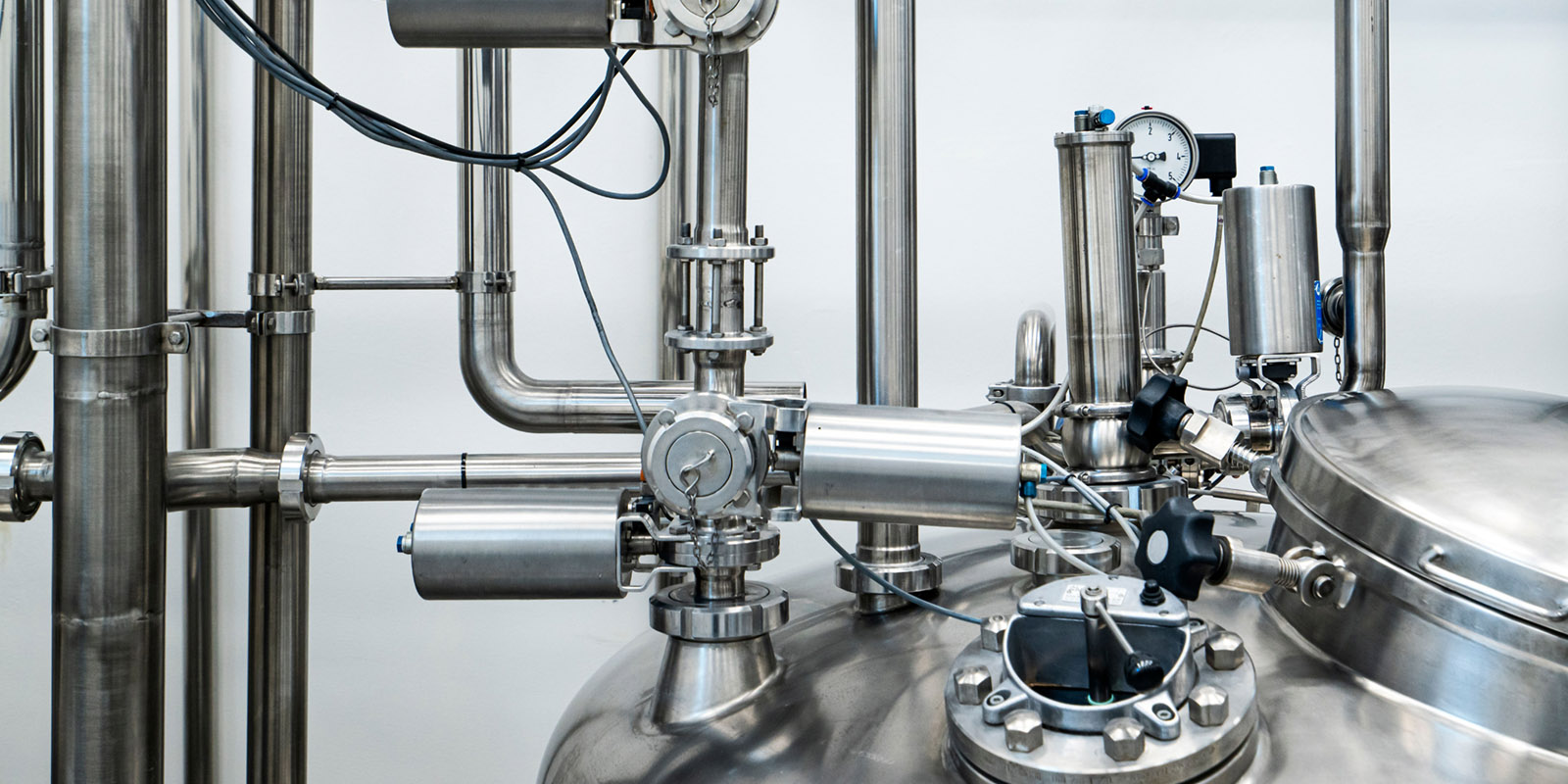
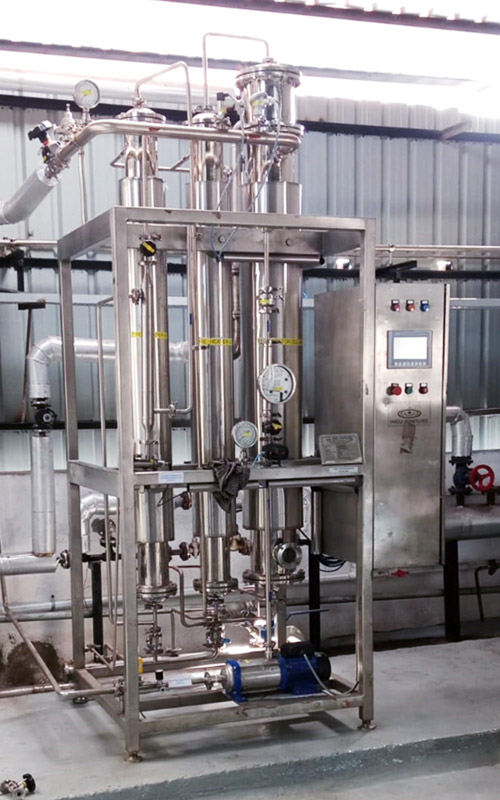
Flocon Pure Steam Generators are engineered to produce pharmaceutical-grade Pure Steam for sterilization and direct process applications where product contact or critical equipment decontamination is required. Optimized through practical application challenges, our design incorporates PLC-based controls for automation and an NCGR (degassing) system for the removal of dissolved gases. Additionally, we also provide the data logging capability to meet the  21 CFR Part 11 regulation for data monitoring and analysis. Manufactured using hygienic design principles and high-grade SS316L materials, our pure steam generators ensure compliance with cGMP, US FDA, WHO, and global pharmacopoeia requirements, including USP, EP, and IP standards, to be industry-ready. Our systems ensure reliable, repeatable, and compliant operation to deliver high-quality, pyrogen-free Pure Steam suitable for:

  • Sterilization-in-Place (SIP) applications
  • Autoclaves and sterilizers
  • Tank and vessel sterilization
  • Bioreactor sterilization
  • Process equipment sterilization
  • Humidification systems in critical environments

Standard Features

Designed to comply with current USP, EP, BP/IP Pharmacopoeia requirements and cGMP guidelines.

Integrated NCGR (degassing) system for removal of dissolved gases for PSG.

Product contact parts in SS316L stainless steel with electropolished internal surfaces (Ra ≤ 0.4 µm typical).

Designed to meet requirements for dryness fraction, non-condensable gases and superheat testing.

Efficient separation of endotoxins and pyrogens through multi-stage evaporation and separation for MCDP.

PLC-based controls with HMI/IPC operation. 304 Stainless steel skid.

Multi-column falling-film distillation technology for production of pyrogen-free WFI.

Premium valves and instruments.

All required safety interlocks.

21 CFR Part 11 optional.
System Parameters

Pure Steam Generation Systems
Parameters Range / Requirements
Capacities 25 to 1,600 kg/hr
Conductivity < 1.3 µS/cm @ 25°C
Total Organic Carbon < 500 ppb
Total Microbial Count < 10 cfu/100ml
Endotoxin < 0.25 EU/ml
Dryness Fraction ≥ 0.95 (EN 285)
Non-Condensable Gases ≤ 3.5% v/v (EN 285)
Superheat ≤ 25°C (EN 285)
Op Temp 140 to 110°C
  1. 1

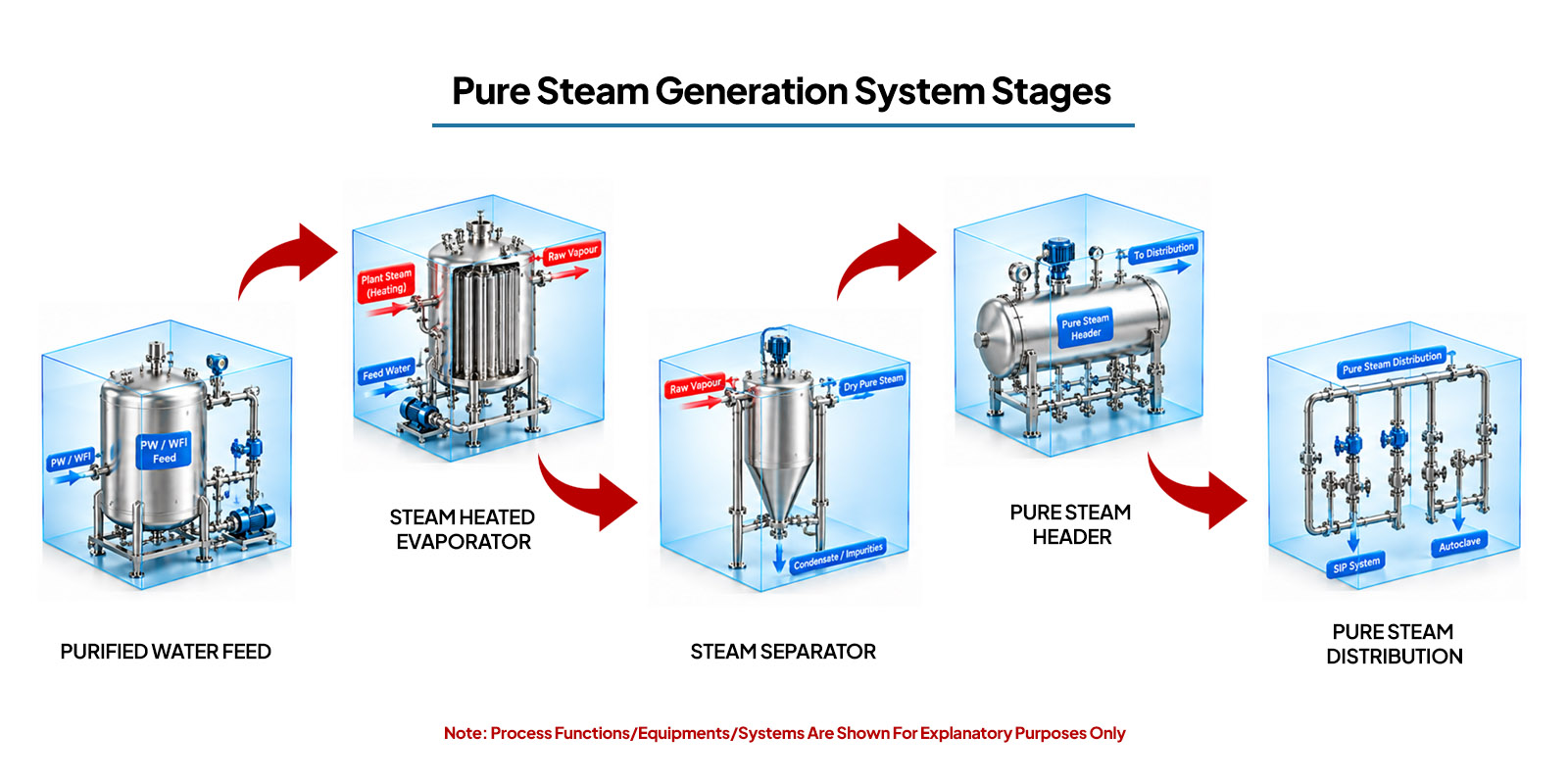
    Purified Water Feed

    Supplies parenteral water or Water for Injection (WFI) as an input source to prevent scaling or impure residue formation during evaporation.

  2. 2

    Steam Heated Evaporator

    Uses an industry-grade plant steam system inside a sanitary heat exchanger to boil and form raw steam from the incoming purified water.

  3. 3

    Steam Separator

    Produces pyrogen-free, dry, saturated, pure steam from steam vapour by using centrifugal force or gravity separation to pull out entrained water droplets, impurities, and pyrogens.

  4. 4

    Pure Steam Header

    Acts like a central collection vessel with a redirect mechanism that manages and regulates pressure surges by distributing the steam to process supply lines.

  5. 5

    Pure Steam Distribution

    Redirects the dry steam to Sterilization-In-Place (SIP) systems and autoclaves through sloped, sanitary stainless steel piping equipped with steam traps.

Certifications & Compliance

Validation documentation

Complete DQ/IQ/OQ validation package along with supporting documentation followed by protocol execution support.

Pharmacopoeia standards

Designed to meet current USP/BP/EU pharmacopoeia standards and WHO / cGMP requirements.
Made To Serve

Pharmaceutical

Biotechnology

Food & Beverage

Diagnostics

Healthcard / Hospitals

Chemical Processing

Frequently Asked Questions

Find answers to common questions about our industrial and manufacturing services, processes, and support. If you need more details, our team is always ready to help.

Still Have Questions?

Our experts are here to guide you through every step of your industrial transformation journey.

Pure steam (clean steam) is steam generated from Purified Water (PW) and used where the steam or its condensate may contact pharmaceutical products, equipment, or critical surfaces. It is produced and distributed using hygienic, validated equipment to minimize chemical and microbiological contamination. Plant or utility steam, in contrast, is generated from treated industrial water and may contain boiler-treatment chemicals, contaminants, or corrosion products. Utility steam is generally used for non-product-contact applications such as heating, HVAC, or jacketed equipment. Pure steam must meet defined quality, condensate, non-condensable gas, dryness, and superheat requirements, while utility steam typically does not.

Pure steam (clean steam) is used where steam quality is critical and contamination must be minimized. Common pharmaceutical applications include:

  • Autoclaves: Sterilization of equipment, components, garments, and materials.
  • SIP (Steam-in-Place): Sterilization of process vessels, tanks, pipelines, filters, and product-contact equipment.
  • Sterilization of clean utilities: Steam sterilization of certain WFI/PW distribution components and critical systems.
  • Cleanroom humidification: Providing hygienic humidification where steam is introduced into controlled environments.
  • Sterile manufacturing: Applications where steam or condensate may contact product or product-contact surfaces.
  • Process heating: Heating critical pharmaceutical equipment where utility-steam contamination could present a risk.

The main references are EN 285, HTM 2010, and the ISPE Baseline Guide. EN 285 primarily covers large steam sterilizers, including steam-quality testing such as dryness, non-condensable gases, and steam quality; it is not, by itself, a complete design standard for a pharmaceutical pure-steam generator. HTM 2010 provides healthcare steam-sterilization guidance and is commonly referenced for steam quality parameters. ISPE Baseline Guide: Water and Steam Systems provides pharmaceutical-industry guidance for pure-steam generation, distribution, materials, sampling, and condensate quality. ASME BPE may additionally guide hygienic equipment and piping design.

A pure steam generator (PSG) requires preventive maintenance and periodic testing according to the manufacturer’s recommendations, GMP procedures, risk assessment, and validated system requirements. Routine maintenance includes inspection of pumps, valves, heat exchangers, vessel internals, gaskets, drains, and safety devices. Critical instruments such as temperature, pressure, conductivity, and level sensors require periodic calibration. Steam quality should be periodically tested for dryness fraction, non-condensable gases, and superheat, where applicable. Pure-steam condensate should be tested for relevant chemical and microbiological attributes. Cleaning or descaling is performed when required. Requalification should follow major maintenance or defined intervals, with all activities documented under GMP controls.

Pure steam quality is commonly assessed by testing representative steam condensate, particularly when the steam is used for sterilization or product-contact applications.

  • Conductivity: Indicates ionic contamination and should comply with the applicable WFI/validated specification.
  • TOC: Helps detect organic contamination and confirms that the condensate remains within the established pharmaceutical-water quality limits.
  • Bacterial endotoxins: Important where pure steam is used for sterilization of product-contact equipment, particularly in sterile manufacturing. Results should meet the site’s validated acceptance criteria.
  • Microbiological quality: May also be evaluated according to the intended application and pharmacopoeial requirements.
  • Steam physical quality: Tests such as dryness fraction, non-condensable gases, and superheat are performed when applicable, especially for sterilization performance.

A pure steam distribution system is designed to maintain steam quality and prevent contamination or condensate accumulation throughout the distribution network.

  • Material: Typically 316L stainless steel, with hygienic orbital welds, suitable surface finish, and sanitary fittings.
  • Pressure: Designed for the required operating pressure and user demand, with adequate pressure control, safety relief, and validated operating ranges.
  • Insulation: Properly insulated to minimize heat loss, maintain steam quality, and reduce condensation. Insulation should be suitable for the facility environment.
  • Condensate removal: Piping is designed with appropriate slope toward low points, minimizing pockets where condensate can accumulate. Hygienic steam traps or condensate drains are installed at strategic low points and near users.
  • Layout: The system should minimize dead legs, provide adequate drainage, and avoid unnecessary branches.
  • Validation: Pressure, temperature, material certificates, weld quality, drainability, steam quality, and system performance should be verified during qualification.

Clarify your queries with our High-Purity Specialist

Share your equipment queries, raw water parameters or loop requirements. Our engineering team will review your requirements and get in touch within 48 hours to clarify your queries and provide you with our best purity solutions.